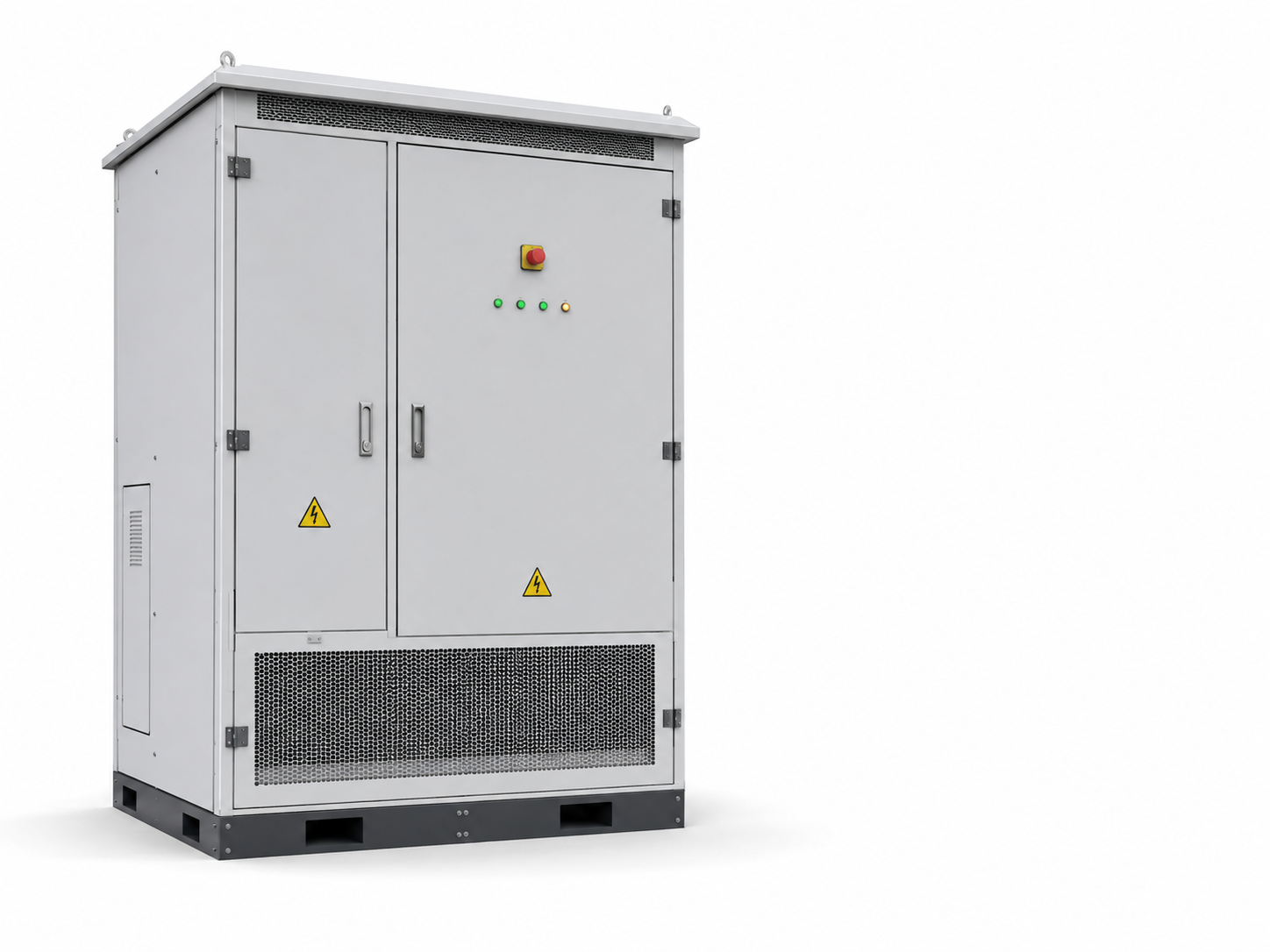
Integrated C&I Cabinet
Factory, hotel, hospital, campus and commercial facilities.
- Suggested range
- 100–500 kWh
- Typical use
- Peak shaving · Backup
 Request a Proposal
 Battery energy storage systems
From requirement analysis and system sizing to supply, integration, commissioning and ongoing support.
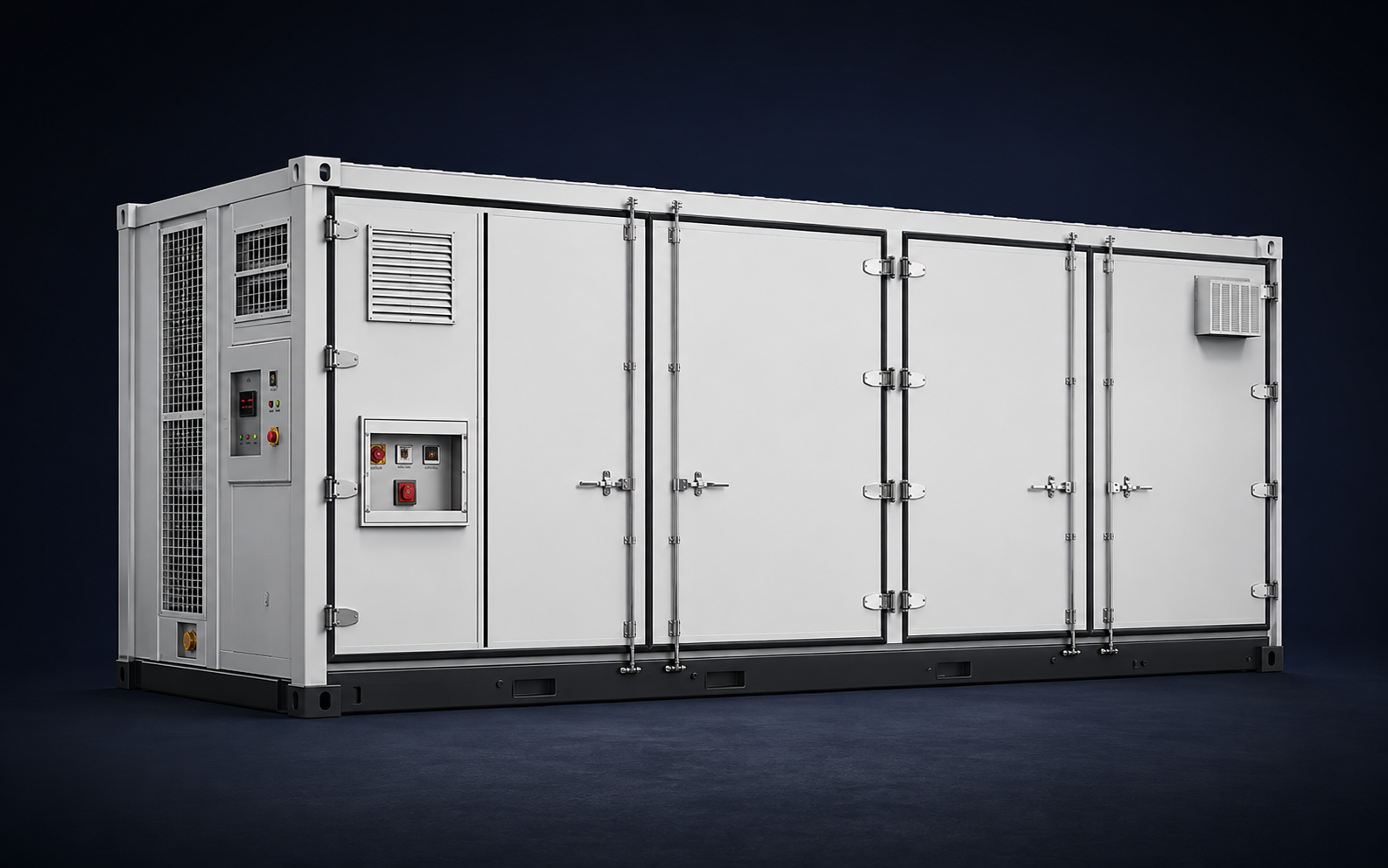
Before selecting a BESS, a buyer needs six clear answers.
01 · Tell us your requirement
These inputs allow the initial solution to be sized around your operating objective, grid interface and available site conditions.
02 · Product configurations
Final power, energy, duration and equipment architecture are configured after reviewing the facility load, renewable generation, grid interface and operating objective.
Factory, hotel, hospital, campus and commercial facilities.
Larger industrial loads and captive-solar applications.
Utility-scale and large industrial energy-storage projects.
Project-specific voltage, power, duration and site integration.
Configuration-dependent: Exact figures—including capacity, cycle life and round-trip efficiency—are published only after confirmation against the selected manufacturer’s technical datasheet and project operating conditions.
03 · What is included?
The exact supply boundary is confirmed in the technical proposal, so buyers can clearly see what is included, excluded and required at site.
04 · Business applications
Discharge during peak-demand periods to reduce maximum-demand charges.
Store surplus daytime generation for evening or non-solar operating hours.
Charge during lower-tariff periods and discharge when energy costs are higher.
Support critical operations during outages and reduce diesel dependence.
Increase captive consumption and reduce export or curtailment of clean energy.
Enable rapid response for grid dispatch, frequency regulation and power quality.
05 · Intelligent liquid cooling
Liquid-cooled configurations can improve temperature uniformity and operating stability, particularly for high-duty applications and hot ambient conditions.
06 · Safety & reliability
Safety architecture and certification evidence are reviewed against the selected equipment, site conditions and applicable project requirements.
Liquid-cooling options, continuous temperature monitoring and rack-level control for stable operation.
Smoke, heat and combustible-gas detection with real-time alarms and remote fault notification.
Cell, module, rack and system-level electrical protection with emergency shutdown and isolation.
Project-specific aerosol, gas or water-based suppression options and compartment-level response.
07 · Commercial benefits
A credible proposal should connect system sizing to the buyer’s tariff, load behaviour, solar profile and reliability requirement.
08 · Why choose Naryo?
We position ourselves as the buyer’s sourcing and execution partner, aligning the equipment, system architecture and supplier documentation with the actual project requirement.
Solution selection based on the project rather than one fixed manufacturer.
One point of contact across manufacturers and system components.
MW, MWh and duration aligned with the facility load profile.
Datasheets, certifications, warranties and test records coordinated before supply.
Logistics, integration, commissioning and handover coordination.
Practical coordination for local site conditions and grid interfaces.
09 · Delivery process
Naryo coordinates the technical, commercial and delivery workstreams through one project-focused interface.
10 · Request a proposal
Share the information available today. We will identify the next technical inputs required for a meaningful proposal.